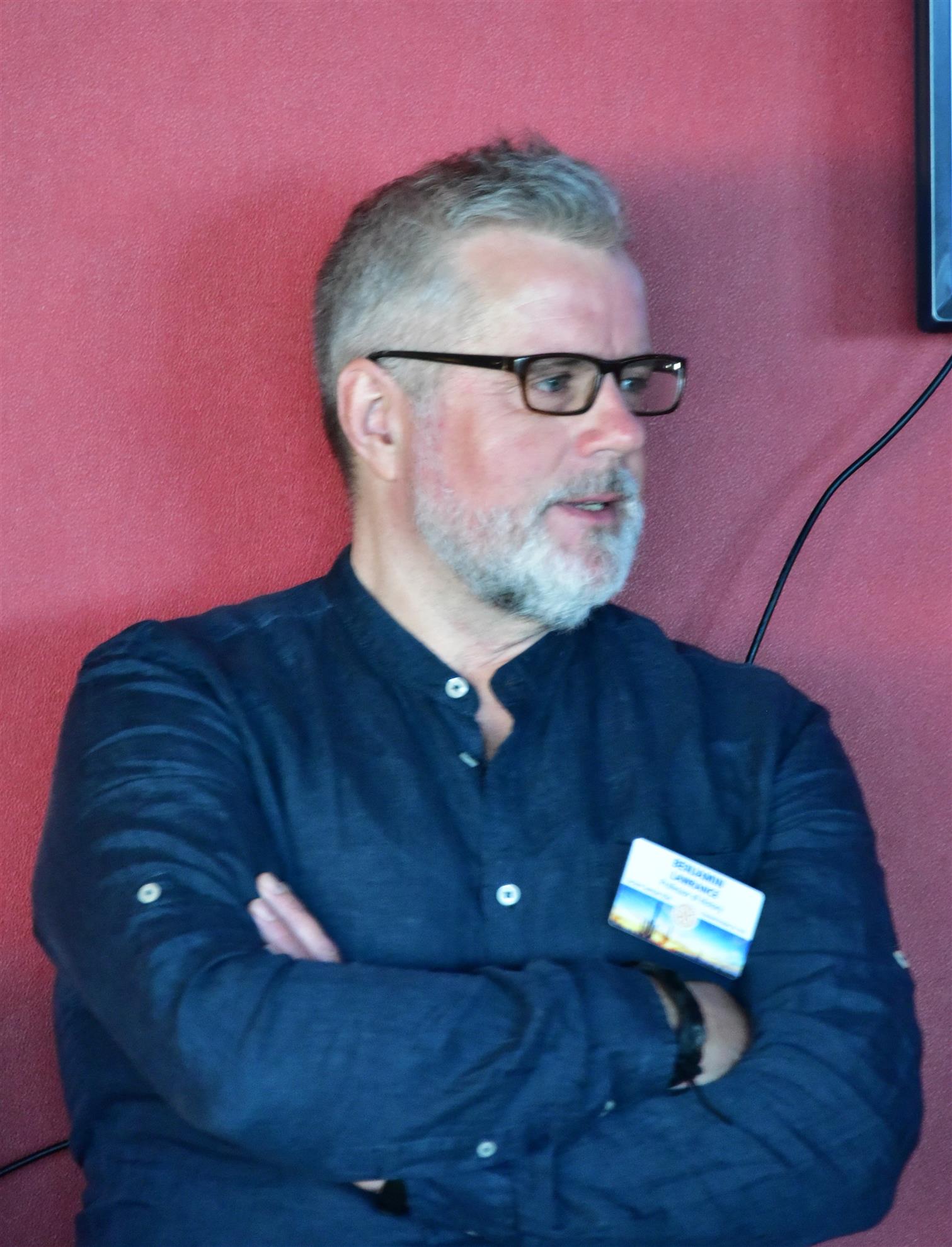
Dr. Benjamin Lawrance gave his talk on March 19, 2026, about his recent trip to Bali where he spent time with the nonprofit, Sewing for Living, that the Club has supported since the COVID pandemic.
He has been a Rotarian since 2003 and a member of the Rotary Club of Tucson Sunrise since 2018. He is a Professor of History at the University of Arizona and a practicing attorney focusing on immigration.
My Trip to Bali
On my trips, I try to do some Rotary things so I decided to go to Bali in early January, connect with the Bali Ubud Sunset Club and see a little bit about how our yarn project is going.
Marion had very kindly arranged for a car to pick me up at the airport. In my mind, Bali is this tiny island, but it took two hours to drive about eighteen, twenty kilometers north and up the mountain to Ubud.
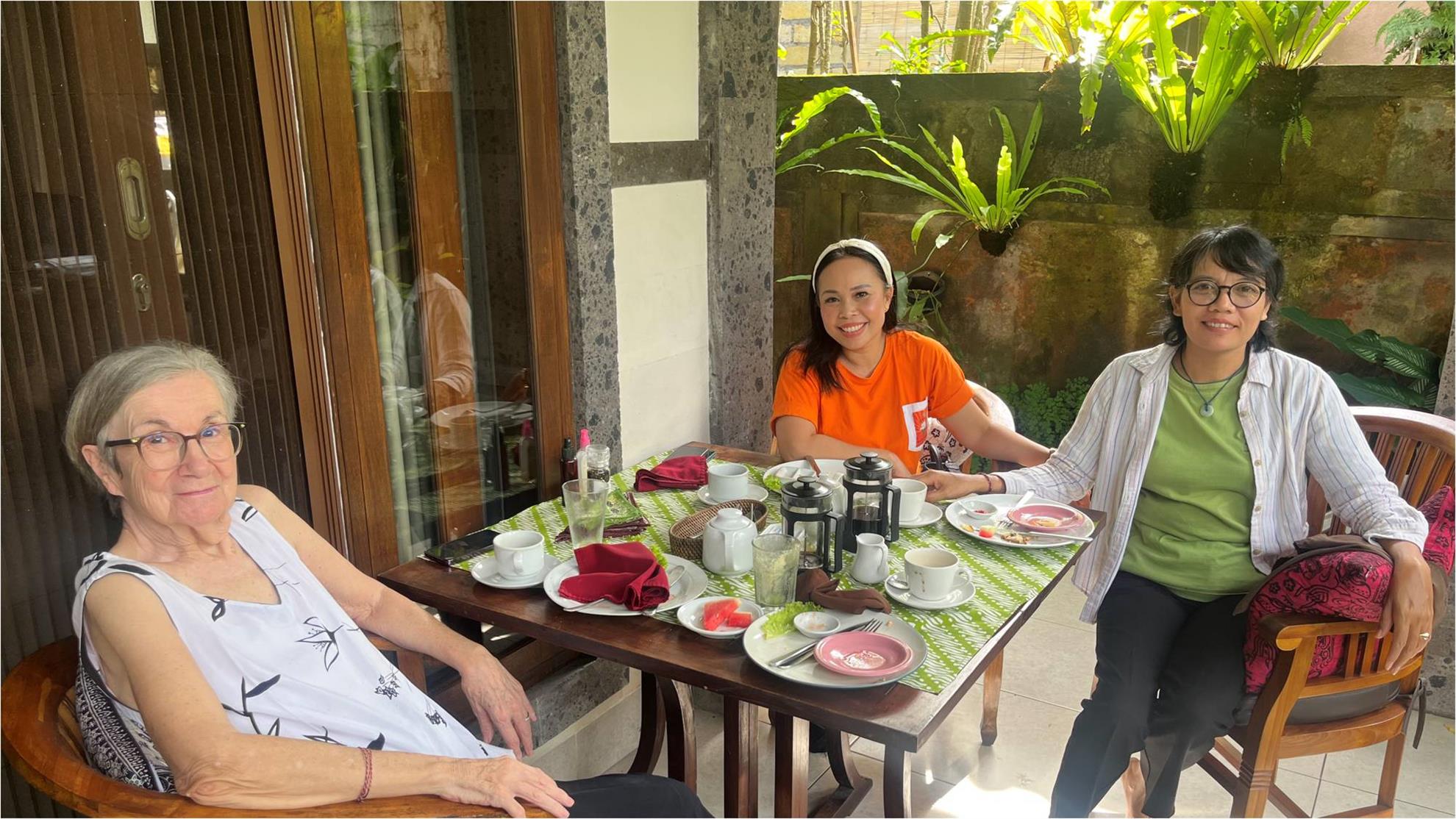 Marion moved to Bali about 10 years ago with her husband who then passed away very suddenly.
 She lives in this family-owned compound in a guest house. They take amazing care of her. She basically lives like a member of the family. Part of Balinese beliefs is in reincarnation. The son of the head of the family believes that his grandmother is reincarnated in Marion.
One of the unusual things about Bali is the land tenure system. The families own these plots of land. They build family temples, then, around the temples, they built the enclosure and the houses. I met an architect when I was there and he told me about some of the specific things about Balinese architecture. All the homes in the compound are separate. All the rooms are separate. There's no way to walk through the whole house. They all have their own doors with various reasons, spiritual and religious and cultural, for this. It’s a little bit like a hacienda.
Bali is a volcanic island, like much of Indonesia. It has several very high extinct volcanoes, or maybe they're just dormant. As you go higher up, it gets much more sparsely populated and is where you can see the traditional farms, a lot of rice paddies. A little bit further north there's the UNESCO heritage site of the Balinese rice paddies.
There is a school where the Ubud Sunset Rotary Club has been working to build a library, actually more of a renovation of a dilapidated building. Marion is a very active Rotarian, but she's also plugged into a number of other charitable groups. They've raised the money to cover the doors and the windows and the shelves. So it's almost finished. The school is four buildings. It was a Saturday, but kids were in the school learning to crochet. It was all girls, although there is one boy who's like a super, super-duper sewer. He was not there, maybe playing soccer with his buddies.
Marion and Rohani and the president of the Club were there teaching basic patterns for crocheting.
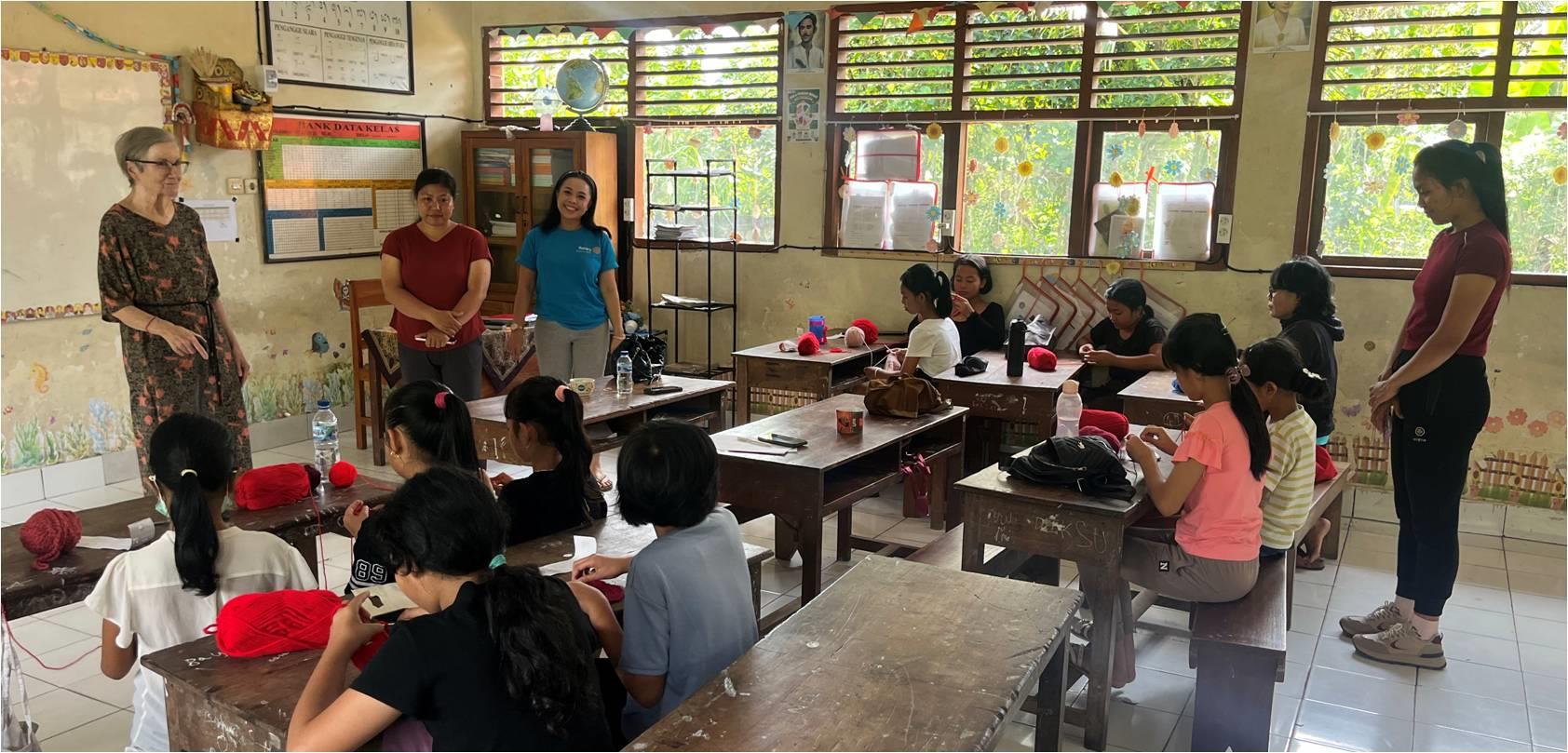
We send yarn to Bali for Sewing for Living, then they crochet or knit or sew and sell the things that they make to create revenue.
Sewing for Living began just before COVID, so, luckily, it brought in some money just when the Balinese lost their primary source of income, which is tourism. Ninety-five percent of the money that comes into Bali is from tourism.
You’ll see a lot of young people, Australian tourists, Americans, others. Russians are everywhere in Bali because there're only a few countries they can go to.
After the visit to the school, we went to an elder care facility. This is an extension of the Sewing for Living project. We send these boxes that are a hodgepodge of products. Some are unopened packets of yarn, but some is stuff that's been sitting in people's shed or cupboard or closet for donkey's years.
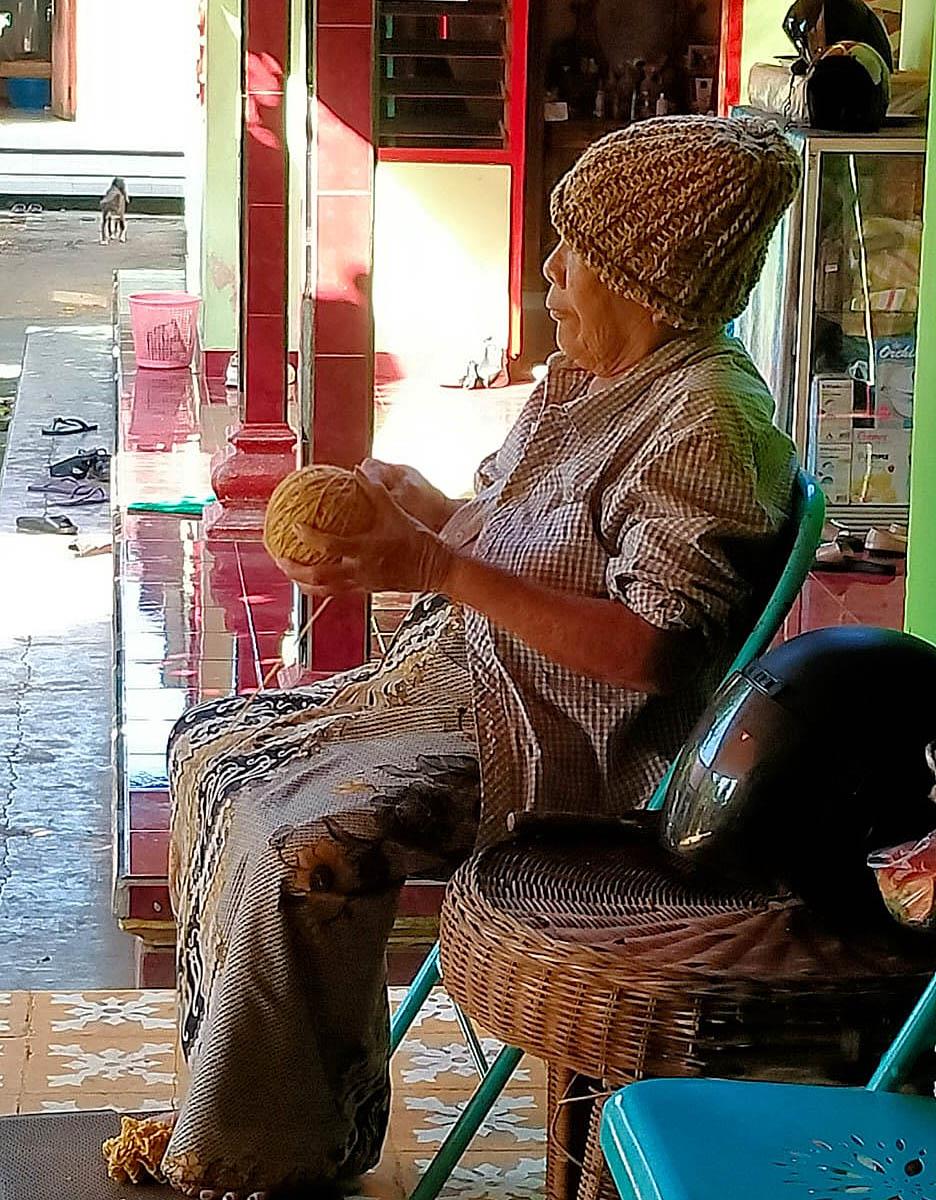 The elders unravel those and roll them into balls of yard. It helps with their mental and physical acuity.
 We have a lot of those facilities here, but they are astonishingly expensive.
That one in Bali is a full twenty-four seven care facility at about $50 a day, including everything, so it's very attractive to foreigners and another source of revenue for Bali, with people coming from other countries to reside for their later years here in very nice conditions.
They sit together as a group and sometimes converse, but they are also moving their hands and wrists so that they're not constantly sitting immobile and isolated.
Here is a bag of yarn that we sent. So they found a way to add additional benefits to their Sewing for Living project without additional costs or overheads. I think that is quite clever, right?
So, the final stop of my Ubud visit was to Sewing for Living. Their space was like a store front. One shop next to it was selling clothing and saris and things like that. And another one was a restaurant.
The space is where they meet as a group to exchange ideas, learn new patterns. Sometimes they knit and crochet and sew together, but that’s often done at home.
They come together and show what they've done, price them and discuss plans to make things for a specific objective. I was there about two weeks before a big event called Ocean Days that takes place annually in Bali for the whole Indonesian region. It's a big project where they bring people together to talk about ocean pollution. Bali is infamous for the enormous ocean pollution. It’s plastic, probably from the tourist industry, but also from others who used to dispose of plastic there.
But the other big tourism draw is scuba diving so they're trying to safeguard the ocean-based tourism industry. If you go online or TikTok or Instagram, you can see videos of massive cleanups of the rivers in Bali and how effective they are.
I did see some of these canals because a lot of them are in the center of Denpasar, the capital. It and other towns are full of canals. Very few of them are polluted now the way that they once were.
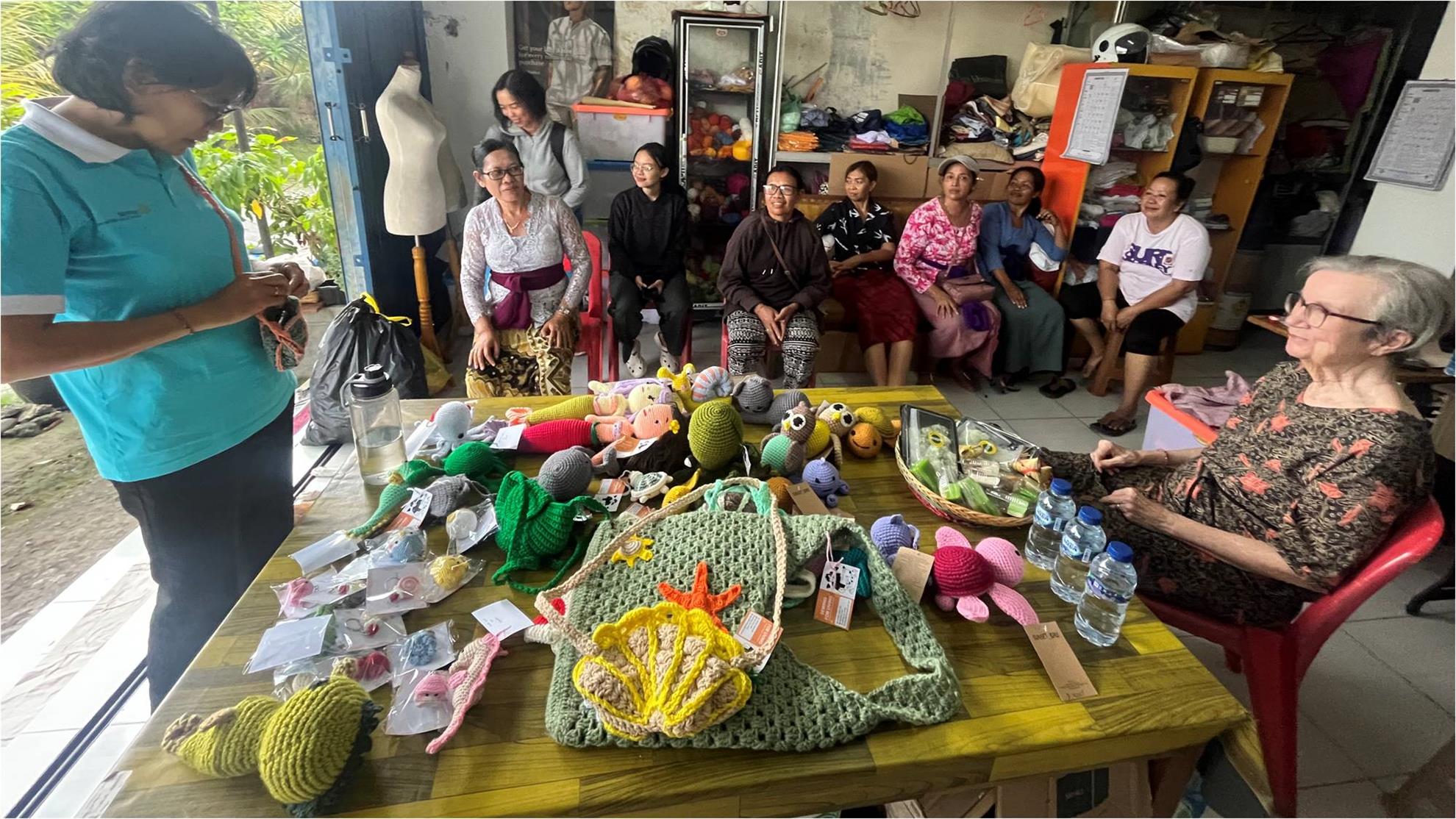 This big Ocean Days event goes for two days every year. The Sewing for Living project has a table where they sell products that they've knitted and sewed and crocheted. They're all kind of ocean-related. This is a bag is in the shape of a giant clam. Then there's a bag behind it with some starfish on it. This lady has a jellyfish. There's a pink turtle and lots of octopuses. I kept picking them up and counting the legs, and there was one with nine, and one with ten, and one with eleven, one with seven. And that’s an octopus? They' have eight! Because it's “octopus”! I did find one that had eight. Maybe the others are mutant octopuses.
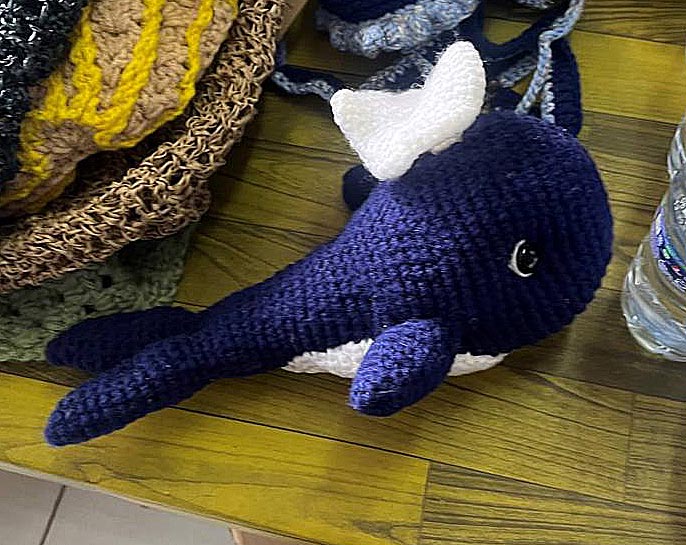 And then there are soft toys. Yeah, mermaids! Seahorses. Manta rays. A little whale.
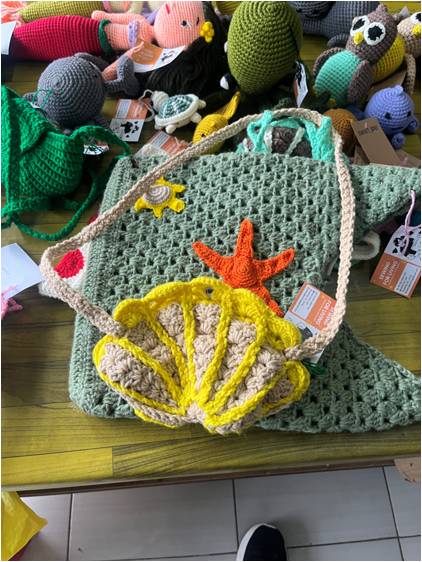 Some are more functional like bags. I bought this bag which is made from recycled plastic, with some shells woven onto it.
 They sold an enormous volume of stuff at Ocean Days. They sold eleven million in Indonesian rupiah, which is about US $700, but that is more than the income of a waiter in a year. That conference is an enormous revenue stream for them.
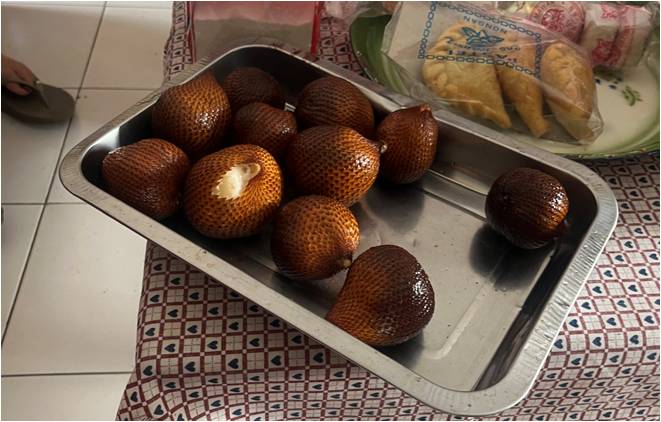
And, since I teach about food, I tried local cuisine. I had some palm fruit that I'd never seen before. It's a sweet fruit, but it also absorbs a lot of water, so you have to drink a lot of water when you eat it, but it was delicious.
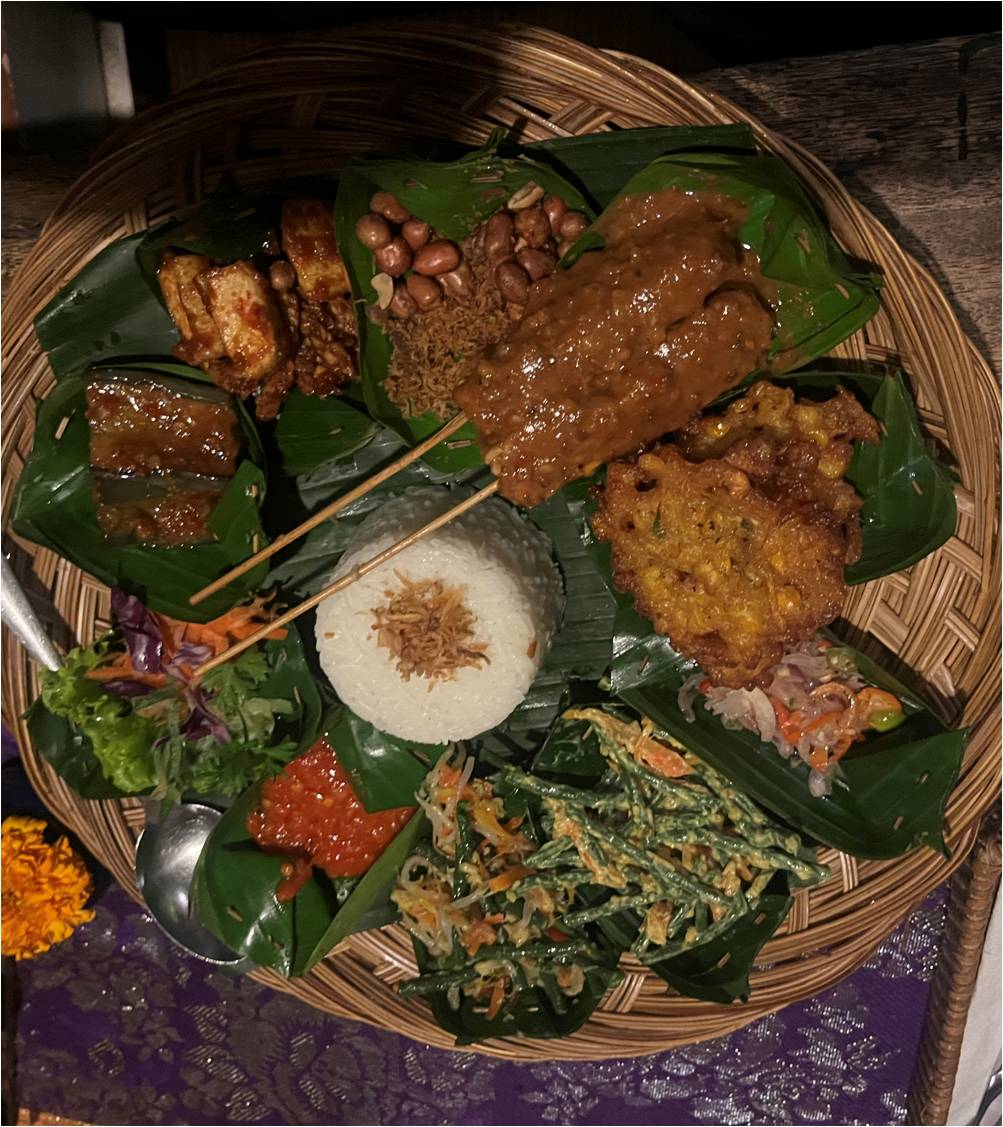 And this is called “nasi campur”, which is Indonesian for “mixed rice”, but it basically means a variety plate. You get whatever they put on the plate with the rice. It could be nasi campur vegetarian, which is what I had, or it can be lots of different things: peanuts, satay, fritters, beans. It’s a kind of traditional dish that you can get in almost any part of Bali. And every time you get it, it will be different. I didn’t get the name a first until it sort of all came together, that it was just whatever is in the restaurant at the time.
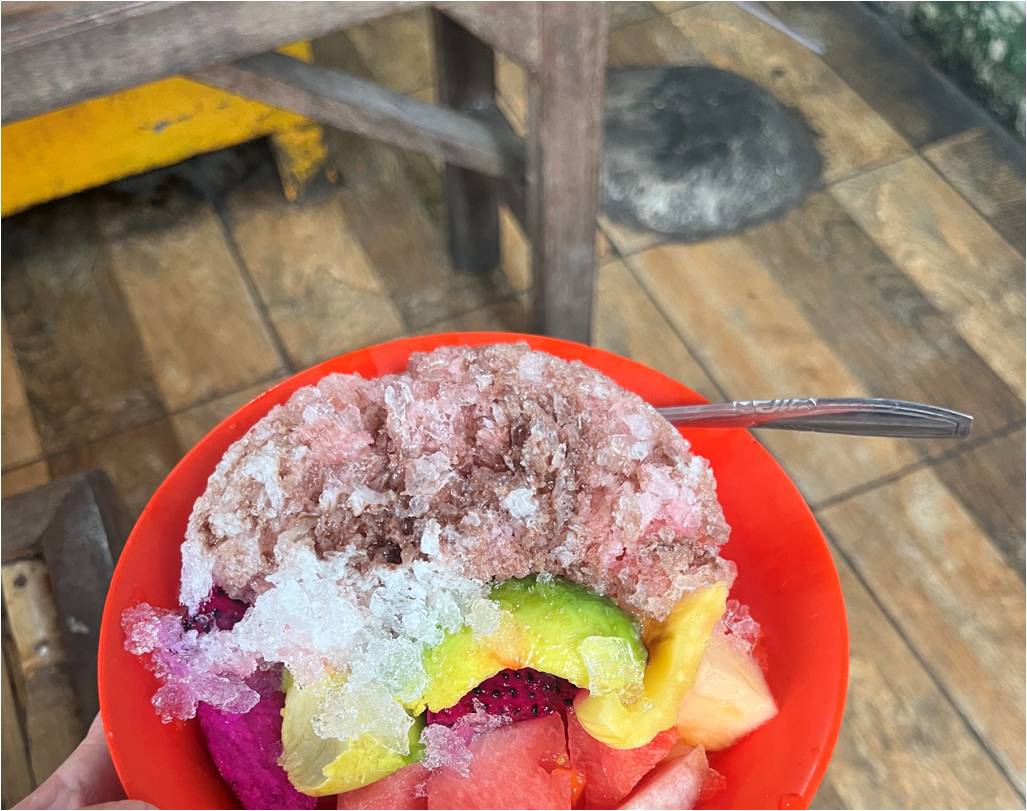 And this is another Balinese dish. There are variations throughout Southeast Asia. In Philippines it's called “halo-halo” (Tagalog for “mix-mix”). It's basically grated ice with fresh fruit and milk or cream. You can see avocado, dragon fruit, watermelon, durian.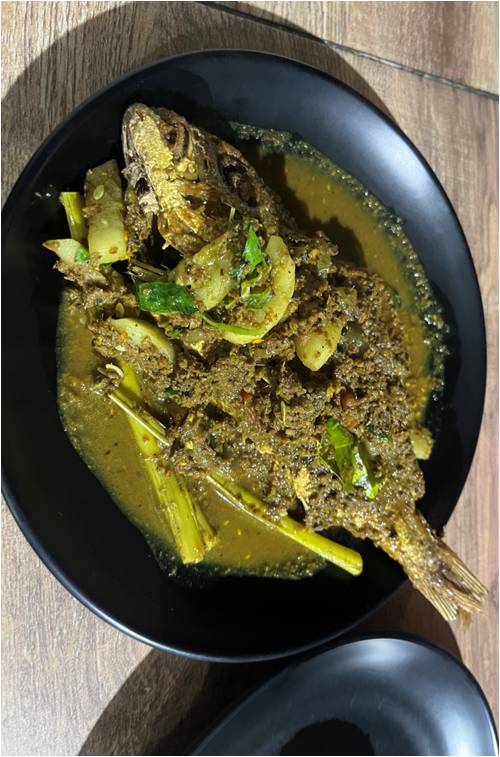
And this is a pan-fried fish, which was covered in turmeric and galangal (related to ginger). It was just amazing food.
I also went to a temple at Marion's suggestion to see the fire dance, which is called the “kacek” dance. It's a Hindu epic. It was an hour of singing and chanting, people in costume, all the men were a chorus, as they sang and performed. It's quite fascinating.
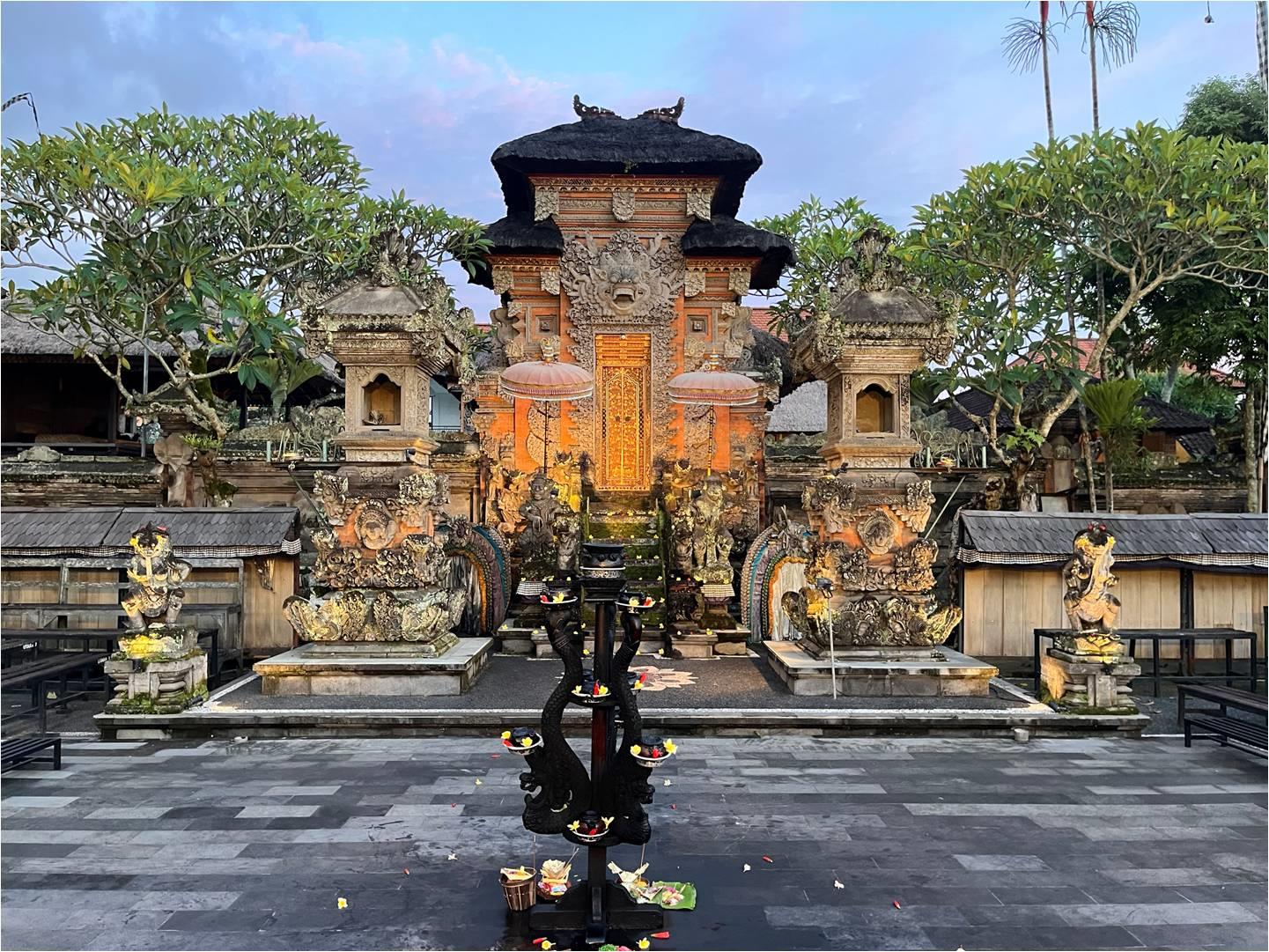
As we heard from Rebecca before, Bali is an unusual blend of Hinduism and Buddhism. Most of Indonesia is Muslim, but Bali has maintained its Buddhist and Hindu practices and a local blend of beliefs in spirits and ancestor worship.
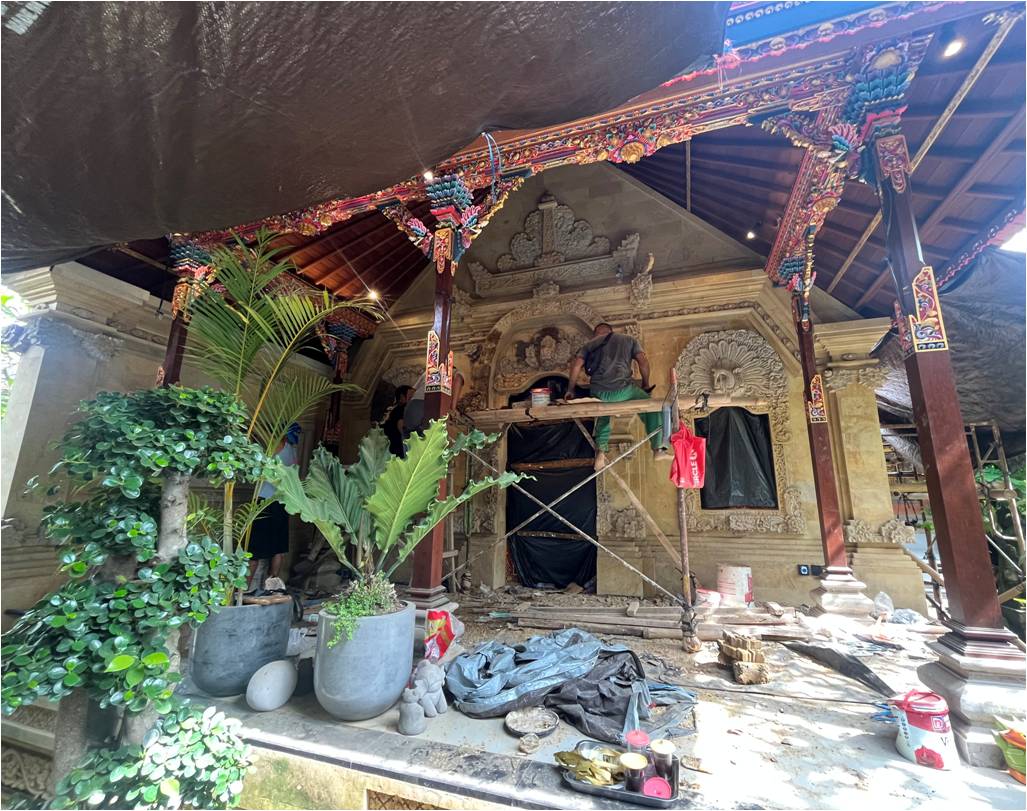 There’re temples everywhere, more than two thousand temples on the island. They all have this similar kind of structure, geometrical and hand carved. All these stone reliefs are hand carved, so there's a huge business for professional stonemasons, which is something that doesn't really exist almost anywhere else these days,
 You know, once upon a time in Europe, all those cathedrals, they were all hand carved. And here in Bali they're still doing it.
This is one of the temples inside Marion’s compound where I was staying. There are these five men hand-carving these stone reliefs. They wet the stone and tap away carving the whole thing.
You could tell the wealthier families, because they have these very elaborate temples.
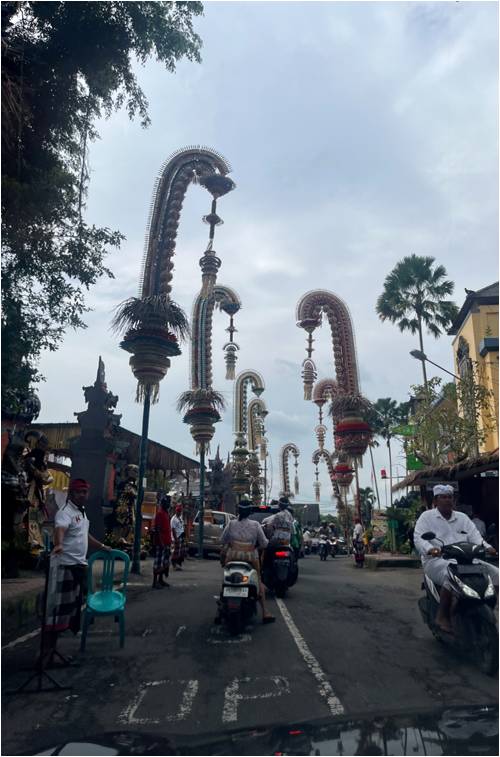
I forget the name of these, but they are hand woven from palm fronds and flowers. They are enormous and erected around temples.
These practices that are still very much part of the fabric of Bali today.
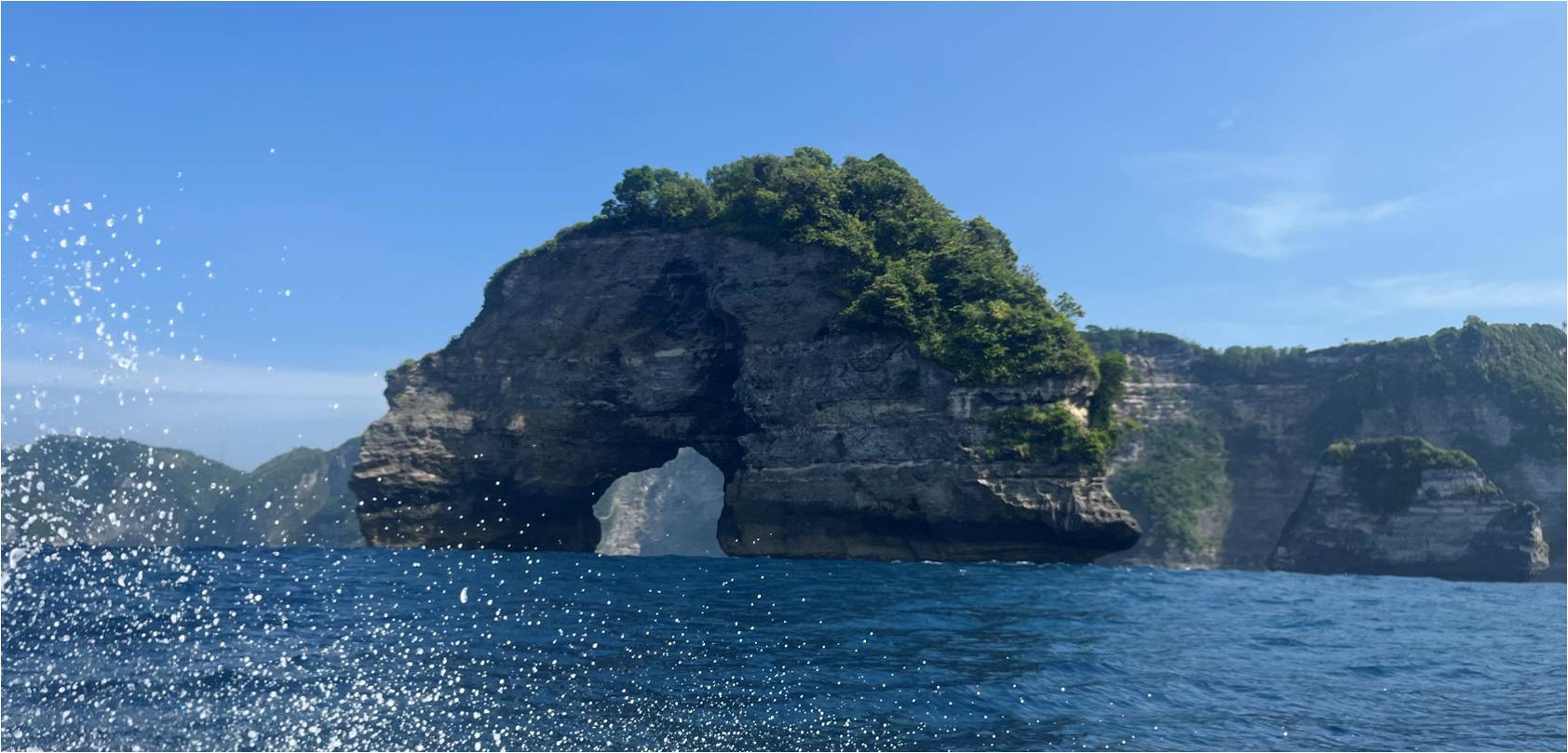
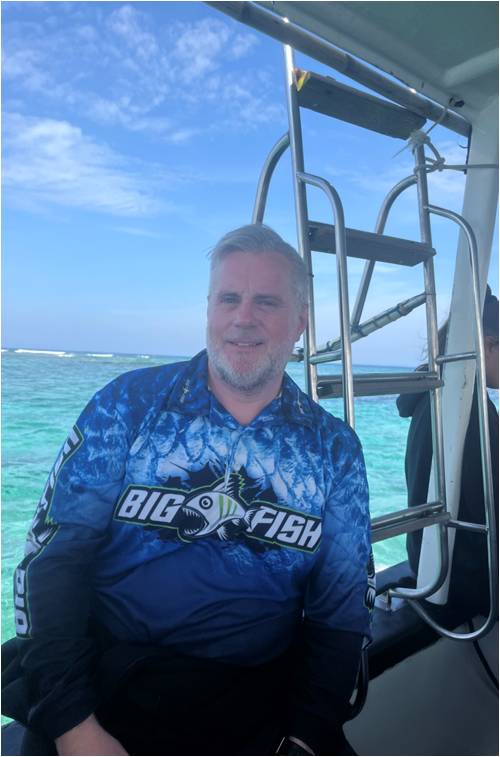
The last part is a little bit about my scuba diving. I did my scuba diving training here in a swimming pool before COVID. I did a few dives in few places like Hawaii. I decided to get back into it in Bali so I went on this diving trip for five days.
We swam with manta rays near a beautiful beach, then went to a site near some mangroves. A friend from Australia joined me for a couple of days. The diving was spectacular. The coral reefs are just astonishing for the volume of fish. I saw just millions, billions of fish.
We didn't see coral bleaching, but what we did see was the legacy of reef destruction from a bad practice in the eighties and early nineties of dynamite fishing, where they would just drop dynamite on the reef to kill the fish which would float to the surface for collection.
 They've been doing reef recovery by putting down cages and attaching new pieces of coral. And you could see some areas that were being restored.
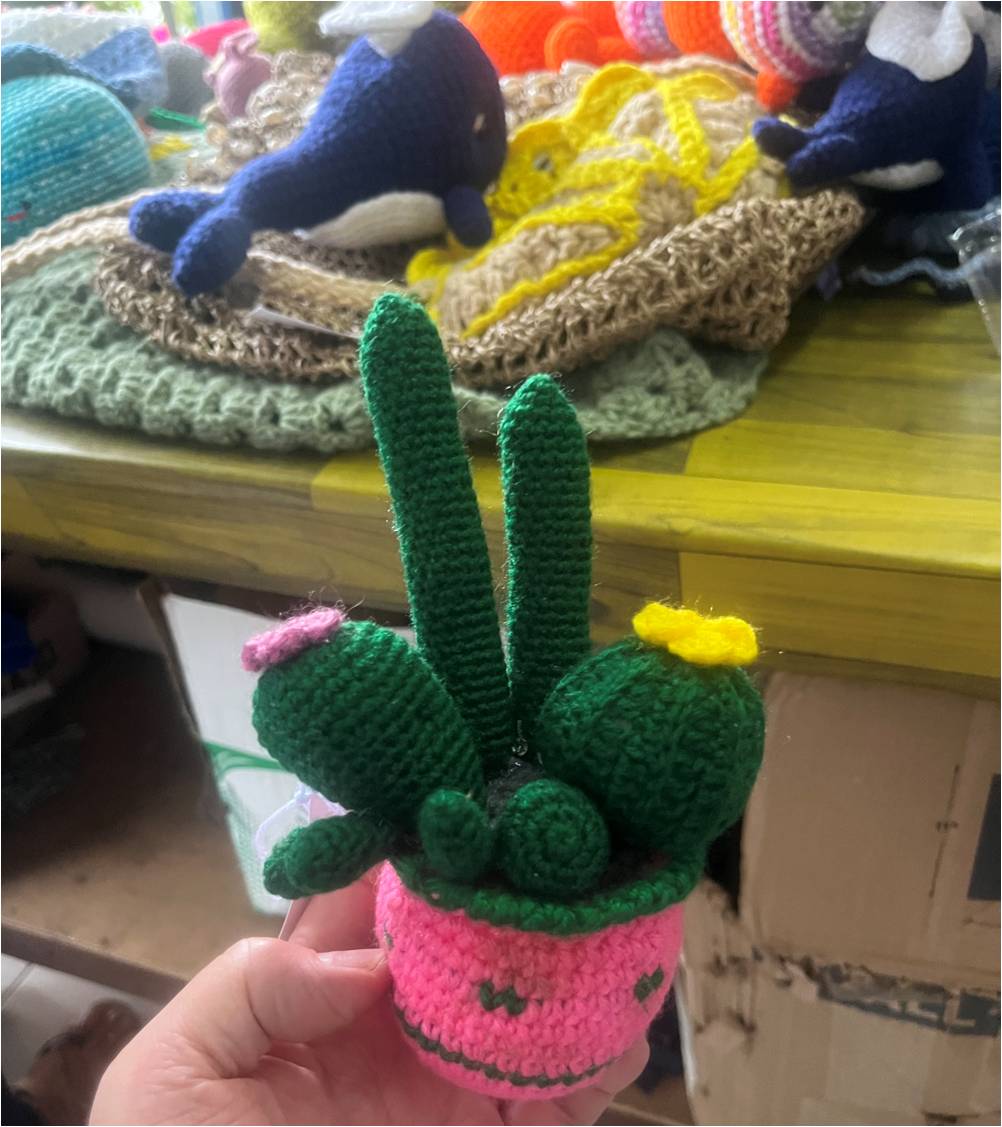
 I am going to give the Club this unusual crocheted potted cactus. And I thought, “Yarn sent from Arizona to Bali! What a great fun thing to bring back to Arizona!”
(Editor's Note: I apologize to Benjamin and Tucson Sunrise for taking so long to get out this report of his talk. It has been just one glitch after another until I would quit, then start over later. Kind of a zen thing. MLD)